


Hotel Renovation for Labor Efficiency: Solutions for Staffing Shortages 2026
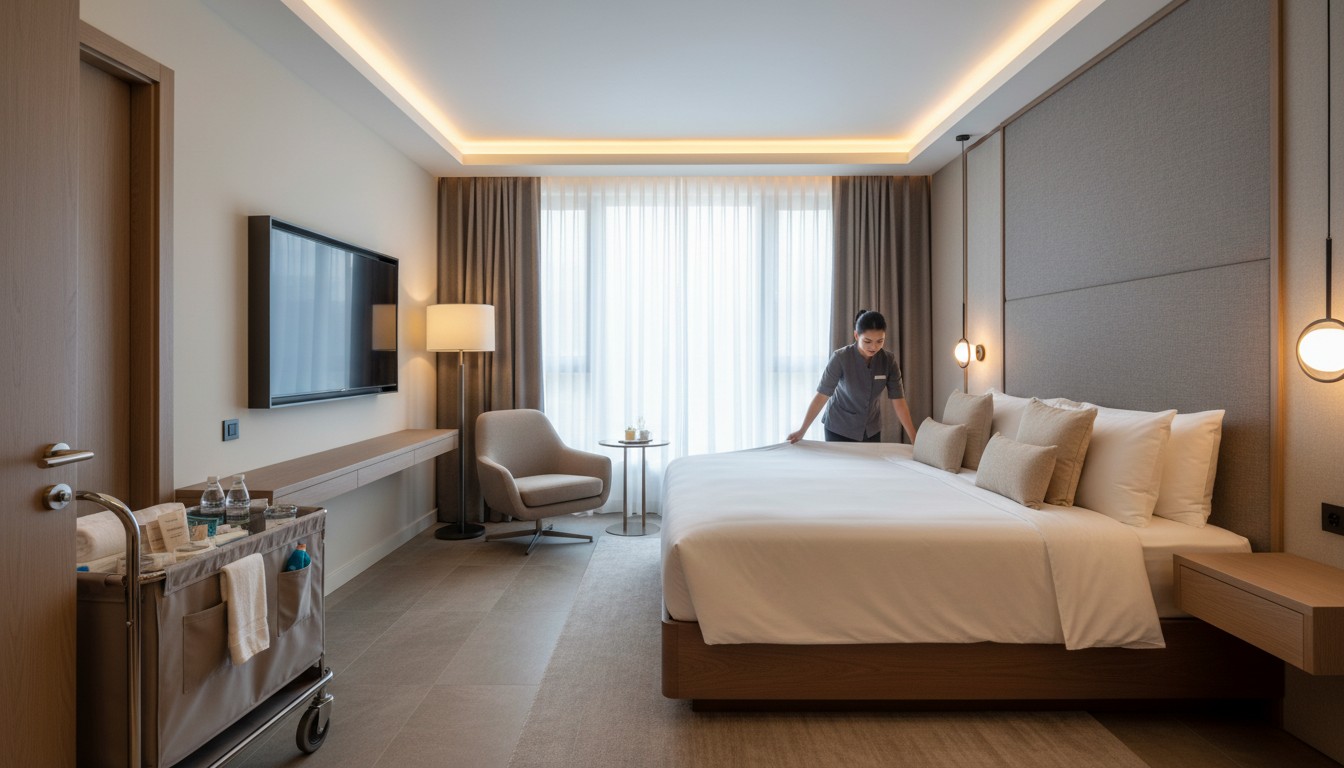
The math is brutal: industry surveys in 2024–2025 indicated that a majority of U.S. hotels continued to report staffing shortages, with housekeeping roles cited most frequently. While total hotel employment has recovered significantly since 2020, many properties continue to operate below pre-pandemic staffing models, particularly in housekeeping and maintenance roles. The World Travel & Tourism Council projects the global hospitality industry will face a shortfall of 8.6 million workers by 2035.
For hotel operators and management companies, the question isn't whether to adapt, but it's how to renovate properties to function efficiently with permanently fewer staff members.
The 2026 Labor Reality: Not Getting Better
The numbers tell a sobering story:
- January and September 2025, U.S. hotels improved labor productivity by cutting hours per occupied room 7-15% across guest services, housekeeping, and management
- Hotels continued to add tens of thousands of jobs in 2025, but overall employment still remained roughly 200,000 positions below 2019 levels
- Many hotels have reduced services due to labor shortages
- Food and beverage labor costs now represent around 32% of total hotel labor expenses, up significantly from pre-pandemic levels
The traditional hotel operating model designed for abundant, affordable labor no longer works. Smart operators are renovating properties around this new reality, not against it.
Housekeeping Efficiency: The Critical Focus
Housekeeping is where labor shortages hit hardest. In 2025, housekeeping hours per occupied room dropped from 0.79 hours to 0.74 hours, and room attendants reduced minutes per occupied room from 25.80 to 24.39, but that's not enough when you simply can't find staff.
Layout Optimization for Reduced Labor
Centralized housekeeping closets
Traditional designs place linen closets at corridor ends, forcing attendants to walk excessive distances. Modern efficiency-focused designs place closets at 50-foot intervals, cutting walk time by 30-40%.
Cost: $3,000-5,000 per closet installation
Impact: One room attendant can service 14-15 rooms instead of 12-13
Corridor width and sightlines
Wider corridors (minimum 66" vs. standard 60") allow housekeeping carts to pass without blocking guest access. Clear sightlines from housekeeping closets to room clusters improve supervision and reduce wasted motion.
Cart-accessible elevators
Renovations should ensure elevators accommodate housekeeping carts comfortably without forcing staff to wait for empty elevators or make multiple trips.
Materials That Reduce Cleaning Time
Luxury Vinyl Plank (LVP) flooring
Operators commonly report faster turns compared with carpet, often saving several minutes per clean. No vacuuming needed, just damp mopping. Stain-resistant surface means fewer deep-clean requirements.
Cost: $4-8 per sq ft installed
Labor savings: 10+ hours per week per attendant
ROI (typical one in many projects): 18-24 months through reduced labor hours
Solid surface countertops
Quartz or solid surface bathroom countertops clean in one pass vs. multiple passes required for tile or laminate with grout lines.
Cost differential: $30-50 more per linear foot vs. laminate
Cleaning time saved: 3-5 minutes per bathroom
Commercial-grade wall coverings
Vinyl wall coverings in high-touch areas (behind beds, around desks) eliminate paint touch-ups. These surfaces withstand thousands of cleanings vs. painted drywall requiring repainting every 18-24 months.
Cost: $2-5 per sq ft installed
Maintenance savings: around 75% reduction in wall repair calls
Frameless shower enclosures
Eliminate shower curtains and tracks, the most labor-intensive bathroom cleaning task. Frameless glass requires one wipe-down vs. removing, washing, and replacing fabric curtains.
Cost:$800-1,500 per shower
Time saved: around 7-10 minutes per room clean
Front Desk and Guest Services: Self-Service Design
Mobile check-in/out and self-service technology can significantly reduce front desk workload. A recent survey found that nearly 80% of travelers would be willing to stay at a hotel with a completely automated front desk, and many prefer self-service check-in options.
Renovation Considerations
Lobby layout redesign
Move from traditional front desk counter configurations to smaller "assisted self-service" pods. Guests handle routine transactions via kiosks or mobile apps; staff intervene only for complex issues.
Space allocation: Reduce front desk footprint 30-50%
Staff requirement: 2 FTE vs. 3-4 FTE for comparable property
Digital key infrastructure
Retrofit door locks for mobile key access. Eliminates key card production, reduces front desk interactions, and provides contactless experience guests increasingly expect.
Cost: $150-250 per door for compatible locks
Payback: 8-12 months through reduced front desk staffing
Package lockers
Self-service package lockers eliminate front desk package handling, a surprisingly labor-intensive task at properties with extended-stay or business guests.
Cost: $5,000-15,000 for 20-30 locker system
Time saved: 2-4 hours daily at busy properties
Room Design: Built for Efficiency
Bathroom Layouts That Save Time
Walk-in showers (no doors)
Curbless walk-in showers with sloped floors eliminate shower doors, curtains, and tracks. Cleaning becomes a simple spray-and-squeegee operation.
Cost: $500-1,200 more than standard shower
Cleaning time saved: 5-8 minutes per room
Wall-mounted toilets
Floor space around wall-mounted toilets cleans in seconds vs. mop-around time for floor-mounted toilets. Reduces housekeeping time and improves hygiene perception.
Cost: $400-700 more per bathroom
Worth it: Yes, for high-turnover properties
Integrated vanity storage
Built-in storage eliminates under-sink clutter and separate storage units that require dusting and organizing.
Furniture and Fixtures
Platform beds (no bedskirts)
Eliminate dust ruffles that require removing, washing, and replacing. Platform beds with open under-bed space clean with one pass of flat mop.
Time saved: several minutes per clean
Wall-mounted nightstands
Floating nightstands eliminate floor cleaning underneath and around legs. Housekeeping can mop entire floor in continuous motion.
Integrated desk/dresser combinations
Reduce furniture piece count, minimize surfaces requiring dusting, and simplify room arrangement.
Technology Integration During Renovation
Smart room controls reduce service calls
Occupancy-based HVAC
Thermostats that automatically adjust when rooms are vacant reduce comfort complaints (the #2 reason for service calls after Wi-Fi issues).
Cost: $150-300 per room
Impact: many properties report fewer HVAC-related service calls
Predictive maintenance sensors
HVAC, plumbing, and electrical sensors that alert maintenance before failures occur reduce emergency service calls that pull staff from scheduled work.
Cost: $200-400 per room
ROI: appr. 6-12 months through reduced emergency calls and equipment damage
Housekeeping management systems
Mobile housekeeping apps
Replace paper-based systems with mobile platforms that optimize room assignments based on geographic proximity, reduce supervisor walk-time, and enable real-time status updates.
Cost: $3-8 per room per month
Efficiency gain: often deliver double-digit improvements in productivity
Renovation strategies
Modular systems
Install HVAC, plumbing, and electrical systems with modular, easily replaceable components. Reduces repair time from hours to minutes and allows less-experienced technicians to handle routine maintenance.
Centralized utility chases
Group plumbing and HVAC vertically in accessible chases. Reduces diagnosis time and minimizes guest room entry for repairs.
Remote monitoring
Install IoT sensors on critical equipment (boilers, chillers, pumps). Maintenance staff can diagnose issues remotely before dispatching, reducing unnecessary truck rolls and wasted time.
Cost: $5,000-15,000 for property-wide system
Labor savings: 20-30 hours per month
Budget Reality: Labor-Efficient Renovation Costs
Labor-efficient renovations cost 10-20% more upfront than standard renovations but deliver measurable ongoing savings. Cost per room comparison:standard renovation: $15,000-25,000 per room and labor-optimized renovation: $20,000-28,000 per room.
Additional investment breakdown:
- LVP instead of carpet: +$1,200 per room
- Smart room controls: +$500 per room
- Frameless showers: +$800 per room
- Digital infrastructure: +$400 per room
- Premium surfaces (solid surface, vinyl wall covering): +$1,000 per room
In many cases, owners can achieve payback in roughly 2–3 years through labor savings, depending on wage levels and occupancy.
Annual labor savings (illustrative example for a 100-room property):
With optimized design and materials:
- Housekeeping: 3,000-4,000 fewer hours annually
- Front desk: 2,000-3,000 fewer hours annually
- Maintenance: 1,000-1,500 fewer hours annually
At $18/hour average:$108,000-$153,000 annual savings
At current staffing costs: Often higher due to overtime premiums
All cost and time ranges in this article are illustrative and based on typical U.S. mid-market projects; actual results vary by market, brand, asset condition, and operating practices.
Making the Business Case to Ownership
When presenting labor-efficient renovations to ownership or management companies:
Frame as risk mitigation, not cost increase
"This design allows us to operate at 85-90% of current service levels with 30% fewer staff, protecting us from labor market disruptions."
Quantify the alternative
Hotels reducing services due to staffing face guest satisfaction declines that directly impact ADR and occupancy. Calculate revenue at risk from service reductions.
Include turnover costs
Hospitality workers are overloaded with tasks due to understaffing, leading to burnout and turnover. Factor $3,000-5,000 per position in replacement costs.
The 2026 Reality: Design for Scarcity
The days of abundant, affordable hotel labor are gone. Properties renovated with 2019 staffing assumptions will struggle. Those designed around 2026 labor reality will thrive.
Key principles:
- Minimize labor-intensive materials and finishes
- Optimize layouts for efficient movement
- Integrate technology that reduces service calls
- Design for cross-training (front desk staff can assist with minor maintenance)
- Prioritize durability that extends replacement cycles
For comprehensive renovation strategies that balance guest experience with operational efficiency, see our article on The Importance of Phased Renovations
Ready to renovate for operational efficiency?
We'll help you: Assess current labor inefficiencies, design layouts that reduce staff dependency, select materials that minimize maintenance, integrate technology strategically, and calculate ROI on labor-efficient improvements.