


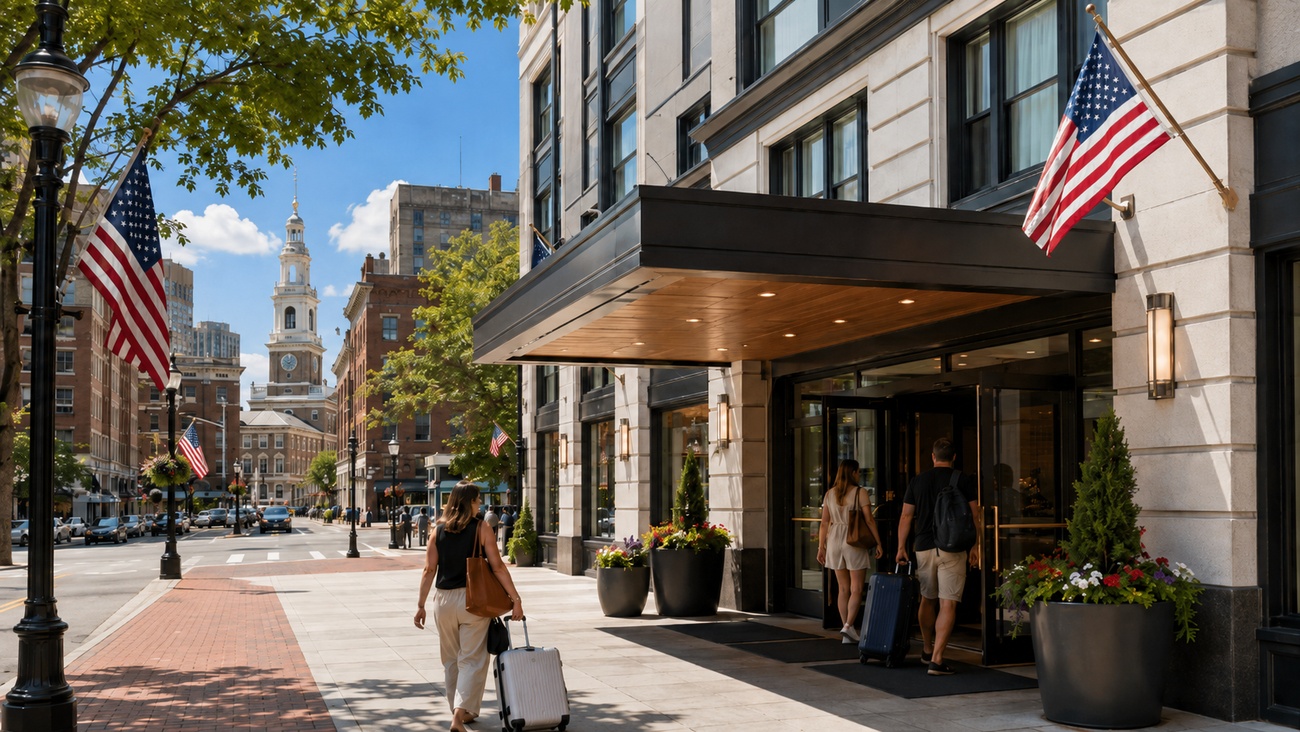
Happy 250th Birthday, America.
On July 4, 2026, the United States officially marks 250 years since the signing of the Declaration of Independence. For the hospitality industry, the anniversary is more than a symbolic milestone. It has become one of the strongest leisure travel drivers for historic and event-driven markets in years.
The combination of America250 celebrations, FIFA World Cup activity across North America, and continued recovery in international travel has created unusually strong demand patterns across many event-driven and historic U.S. hotel markets this summer. Hotels that entered 2026 with renovated guestrooms, updated public spaces, and stronger operational positioning are generally better positioned to capture that demand.
A Demand Environment Unlike a Typical Summer
The numbers behind the 2026 travel season are significant.
The National Travel and Tourism Office projected international arrivals to the United States would reach approximately 70.5 million visitors in 2026, supported by major event travel and broader international recovery trends. At the same time, CoStar and Tourism Economics forecast a return to modest RevPAR growth in 2026.
That supply side matters. New hotel development has slowed substantially compared to the pre-pandemic cycle, particularly because financing and construction costs remain elevated. In practical terms, fewer new hotels are opening while demand in many markets is climbing sharply.
The result is stronger pricing power for existing hotels, especially those in strong physical condition.
Many America250-related markets are expected to enter the July 4 holiday period with stronger demand potential than a typical summer holiday week. In several historic and event-driven destinations, compressed availability and higher-than-normal leisure rates may become more visible around peak event dates across both branded and independent properties.
The impact, however, is not evenly distributed nationwide. The strongest performance gains are concentrated in historic destination markets, major event cities, national park gateway regions, drive-to leisure corridors and markets connected to anniversary programming and international tourism flows.
Hotels in purely transient or non-event-driven markets may still benefit from broader travel strength, but the most aggressive demand compression is happening in cities directly tied to America250 and World Cup activity.
The Markets Seeing the Strongest Impact
Philadelphia, Boston, New York City, Washington D.C., and Charleston have emerged as some of the primary America250 travel markets due to their direct historical significance and concentration of federal anniversary programming.
Philadelphia carries unique visibility this year as the birthplace of the Declaration of Independence. Washington D.C. has seen sustained visitor traffic tied to museum exhibitions, cultural programming, and national commemorative events extending well beyond the holiday weekend itself.
The ripple effect extends beyond those headline cities.
Markets such as Williamsburg, Gettysburg, Lexington, Concord, and other historically connected destinations are benefiting from increased regional travel activity and multi-stop road-trip itineraries. Hotels in these secondary markets are seeing stronger summer demand patterns than typical seasonal norms, particularly among domestic leisure travelers.
At the same time, FIFA World Cup activity continues to amplify demand in major metro markets including New York, Dallas, Los Angeles, Atlanta, Boston, Philadelphia, Miami and many more.
The overlap between World Cup host cities and America250 destinations has created an unusually concentrated six-week demand window across large portions of the U.S. hotel market.
Why Renovation Timing Matters So Much This Year
One of the clearest lessons of 2026 is how strongly renovation timing impacts revenue performance during major travel cycles.
Hotels that completed renovations before peak summer demand are entering the season in a much stronger competitive position. Updated photography, stronger guest reviews, and better OTA conversion are all helping renovated properties push ADR more aggressively this summer.
Properties still under renovation during June and July are facing the opposite scenario: displaced inventory, operational disruption, and lost pricing opportunity during a stronger-than-usual leisure summer.
For many owners, summer 2026 is already reinforcing the importance of scheduling major renovations around long-term market demand cycles rather than simply around internal budgeting calendars.
This is particularly true in historic, leisure, and event-driven markets where a missed summer season can materially affect annual performance.
Timing also affects financing, brand approvals, and project scope.
Guest Expectations Are Higher in 2026
Another dynamic becoming increasingly visible this summer is the widening performance gap between refreshed properties and outdated ones.
During major travel years, guest expectations tend to rise alongside room rates. Travelers paying premium summer ADRs expect updated guestrooms, strong WiFi, clean and modern bathrooms, reliable HVAC systems, contemporary finishes and high-quality mattresses and bedding.
Hotels charging peak-event pricing without matching physical condition are seeing more pressure on online reviews and guest satisfaction scores.
This matters even more for independent hotels competing directly through Google, OTA listings, and review platforms rather than through brand loyalty systems.
In many secondary markets, a recently renovated independent hotel with strong reviews may compete effectively against older branded competitors that deferred upgrades during the past several years.
The Bigger Industry Lesson
The broader lesson emerging this summer is not simply that America250 created temporary demand. It is that major national events reward hotels that invested early in product quality, operational readiness, and long-term positioning.
Owners who completed renovations ahead of this cycle are now benefiting from higher ADR, stronger occupancy, better online conversion, improved guest satisfaction and greater pricing flexibility during compression periods.
Owners who delayed necessary upgrades are entering one of the strongest leisure summers in years with reduced competitiveness exactly when market expectations are highest.
For many operators, the performance gap between renovated and outdated properties is becoming far more visible.
Key Takeaways
America250 and the FIFA World Cup have combined to create one of the most unusual summer demand environments the U.S. hotel industry has experienced since before the pandemic.
For hotel owners, the strongest-performing properties this season are generally not the newest ones. They are the properties that entered 2026 operationally prepared, physically updated, and strategically positioned for higher guest expectations and increased travel demand.
At Liberty Way Renovation, we work with hotel owners across the USA on renovation planning, PIP execution, conversion projects, and operational upgrades designed around real market conditions.
If this summer is clarifying where your property stands competitively, now is the right time to begin planning improvements for the next demand cycle before timelines, contractor availability, and construction costs tighten again.