


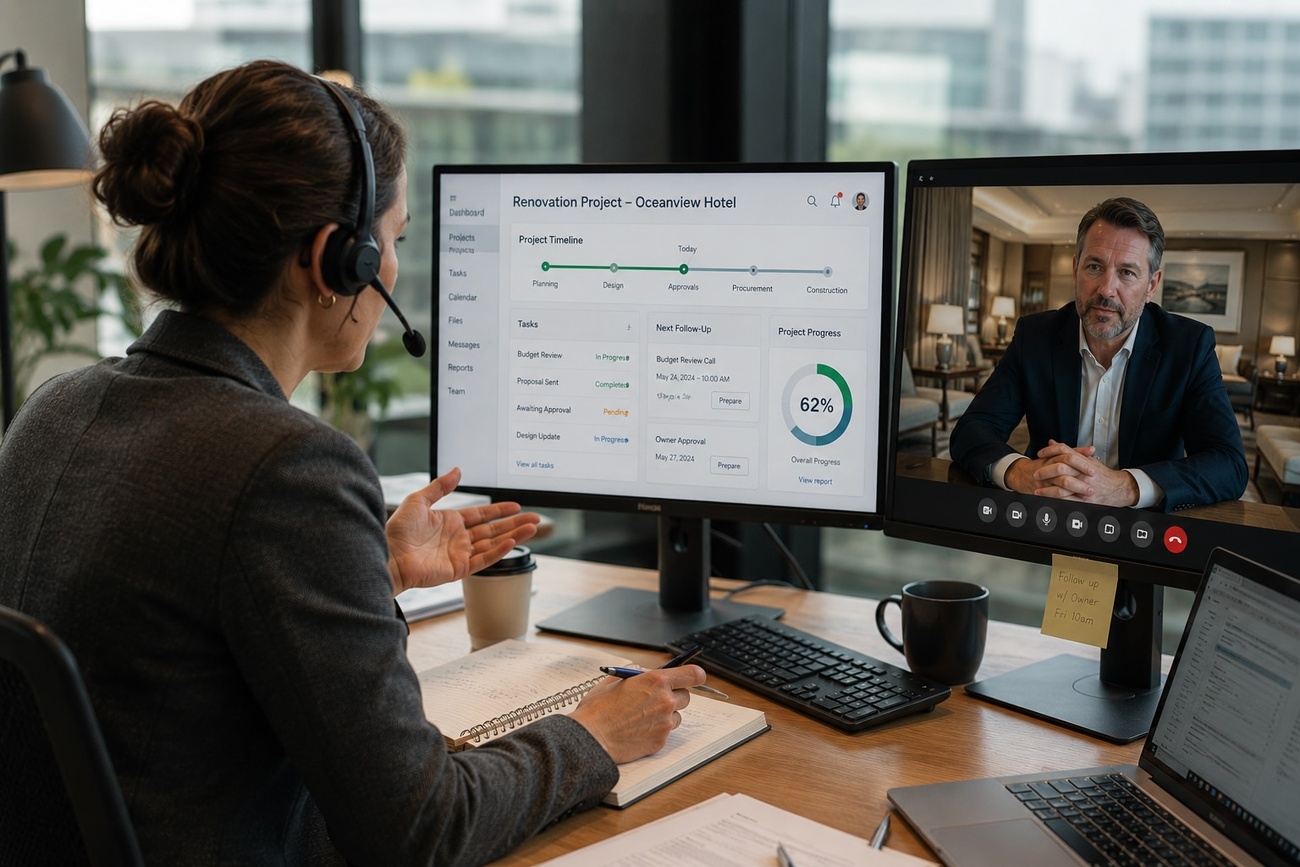
A hotel renovation project rarely moves from first conversation to signed agreement in one simple step. A hotel owner may receive a Property Improvement Plan. A brand may request updates. A renovation scope may need to be reviewed. Budgets must be discussed. Financing may need approval. Procurement timelines must be considered. Operations teams need to understand how the work will affect guests, occupancy, and day-to-day hotel performance.
Because of this, hotel PIP renovation projects can easily slow down, not because the project is unimportant, but because there are many moving parts.
This is where structured follow-up becomes essential.
For hotel owners and renovation teams, follow-up is a project movement tool. It helps keep the conversation organized, the next steps clear, and the renovation timeline realistic.
Why Hotel PIP Renovation Projects Slow Down
PIP Compliance and Brand Requirements
A Property Improvement Plan is often connected to brand compliance, franchise standards, guest experience, ownership goals, or property repositioning. In many cases, a PIP is not optional. It comes with expectations, deadlines, and specific requirements that need to be planned carefully.
Common reasons projects slow down include:
- the owner is still reviewing the PIP requirements;
- the brand is requesting clarification;
- the renovation scope is still being defined;
- the budget needs approval;
- financing is not finalized;
- the property is waiting for the right renovation window;
- FF&E or material lead times need to be checked;
- multiple decision-makers are involved;
- the project needs to be phased around occupancy.
In hospitality renovation, silence does not always mean “no.” Sometimes it simply means the project is waiting for the next clear step. A structured follow-up process helps make that next step visible.
Follow-Up Is Part of Hotel Renovation Planning
Hotel PIP Project Management Process
In many industries, follow-up is treated as a sales activity. In hotel renovation, it is much more than that. A good follow-up process helps hotel owners and renovation teams answer practical questions:
- What documents are still missing?
- Has the PIP been fully reviewed?
- Is the renovation scope clear?
- Has the proposal been received and understood?
- Are there budget concerns?
- Who needs to approve the project?
- What is the target start date?
- Can the hotel remain open during renovation?
When these questions are not tracked, a project can lose momentum. When they are tracked, the renovation team can guide the owner through the process with clarity and confidence.
The Risk of an Unstructured PIP Process
Hotel renovation projects often involve more than one stakeholder. The property owner, brand representative, general manager, designer, lender, purchasing team, and contractor may all be involved at different stages.
Without structured follow-up, important details can get lost between emails, phone calls, documents, and internal discussions.
For example:
- A PIP may be sent, but no one confirms which items are urgent.
- A proposal may be prepared, but no meeting is scheduled to review it.
- A hotel owner may ask for a revised scope, but the request is not tracked.
These issues may not stop the project, but they can create confusion, delays, and missed opportunities to plan ahead.
“No Response” Does Not Always Mean the Project Is Lost
One of the biggest misunderstandings in hotel renovation is assuming that a quiet period means the project is no longer active.
In reality, hotel renovation decisions often pause for valid reasons. The owner may be waiting for brand feedback. The lender may be reviewing numbers. The hotel may be trying to avoid peak occupancy periods. The scope may need adjustment. Procurement timelines may need to be confirmed before a final decision.
A strong follow-up process recognizes these realities. Instead of pushing for a decision before the owner is ready, structured follow-up keeps the project organized until the right decision can be made. That is especially important for hotel PIP renovation, where planning timelines can span several months.
What Structured Follow-Up Should Include
A simple but effective hotel renovation follow-up system should make every active opportunity easy to understand.
For each PIP or renovation request, the team should know:
- property name and location;
- hotel brand or flag;
- number of rooms;
- type of renovation;
- PIP deadline or target completion date;
- current project stage;
- key decision-maker;
- documents received;
- proposal or estimate status;
- target renovation window;
- procurement concerns;
- next follow-up date;
- next action owner.
The most important rule is simple:
Every project should have a next step, an owner, and a date.
If a renovation opportunity does not have those three things, it can easily disappear from the active pipeline.
A Practical Follow-Up Flow for Hotel PIP Renovation
Hotel Renovation Timeline Planning
Every hotel project is different, but most PIP renovation opportunities benefit from a clear follow-up rhythm.
1. Confirm the PIP or Renovation Request
The first step is to confirm that the request has been received. This gives the hotel owner confidence that the project is being reviewed and that the renovation team is engaged.
At this stage, the team can request key information:
- the PIP document;
- property photos;
- room count;
- brand standards;
- preferred timeline;
- existing drawings or plans;
- budget expectations;
- operational constraints.
The goal is to create a clear starting point.
2. Review the Scope and Identify Missing Information
Once the initial documents are received, the renovation team should review the scope and identify what is still needed.
For example, a PIP may mention guestroom updates, corridor renovation, lobby improvements, exterior work, ADA upgrades, or FF&E replacement. Each area may require different planning, pricing, scheduling, and procurement considerations.
A structured follow-up ensures missing details are requested early instead of causing delays later.
3. Discuss Timeline and Operational Constraints
Hotel Renovation Phasing for Occupied Properties
Hotel renovation is different from many other types of construction because the property may need to remain open during the work.
That means the renovation plan must consider:
- guest disruption;
- floor-by-floor phasing;
- room availability;
- noise restrictions;
- peak occupancy periods;
- staff access;
- safety;
- material staging;
- brand deadlines.
A follow-up conversation around timing helps the owner understand what is realistic and what needs to be planned in advance.
4. Send the Proposal and Schedule the Review
Sending a proposal is not the end of the process. It should be followed by a scheduled review.
This gives the owner and renovation team a chance to clarify assumptions, review scope, address budget concerns, discuss alternatives, and confirm the next decision point.
A proposal without follow-up can become just another document in an inbox. A proposal with structured follow-up becomes a working plan.
5. Track Delays Without Losing the Opportunity
Hotel Renovation Procurement Planning
Not every project is ready to move forward immediately.
Some hotel owners need more time. Some are waiting for financing. Some are coordinating with the brand. Some are planning renovation around a future low-occupancy season.
These projects should not be forgotten. They should be placed into a long-cycle follow-up process.
That may include monthly or quarterly check-ins, reminders about procurement lead times, updates around renovation planning, or a future scope review when the owner is ready to move forward.
Why This Matters for Hotel Owners
For hotel owners, a structured follow-up process creates clarity, especially when the project is connected to a PIP deadline or brand requirement.
A hotel owner does not need more confusion during renovation planning. They need a renovation partner who can help organize the process and keep it moving.
Why This Matters for Renovation Teams
For renovation teams, structured follow-up improves coordination. It helps the team know which projects are active, which proposals need review, which owners need a response, and which opportunities are waiting for future timing.
It also helps avoid last-minute urgency. When PIP deadlines, procurement timelines, and renovation windows are tracked early, the team can plan more effectively.
Follow-Up Builds Trust Before the Work Begins
Hotel owners pay close attention to how a renovation partner communicates before the contract is signed.
If communication is slow, unclear, or inconsistent during the planning stage, the owner may worry that the renovation itself will be handled the same way.
But when the renovation team follows up clearly and professionally, it sends a different message. It shows organization, accountability, respect for the owner’s timeline, and an understanding of the complexity of hotel renovation.
In hospitality renovation, trust is built before the first room is under construction.
Conclusion: Keep the Project Moving
Hotel PIP renovation projects do not usually slow down because one person does not care. They slow down because the process is complex.
There are documents to review, budgets to approve, brands to satisfy, materials to plan, guests to protect, and timelines to coordinate.
That is why structured follow-up matters.
For hotel owners and renovation teams, follow-up is a way to keep the project moving from first request to clear scope, from proposal to approval, and from planning to renovation. Every PIP, proposal, and renovation conversation should have a next step, an owner, and a date.
Because in hotel renovation, progress does not happen by accident. It happens when the process is managed.
Have a PIP or hotel renovation project to review?
Send your PIP to Liberty Way Renovation and get a clear next step for your property renovation plan.