


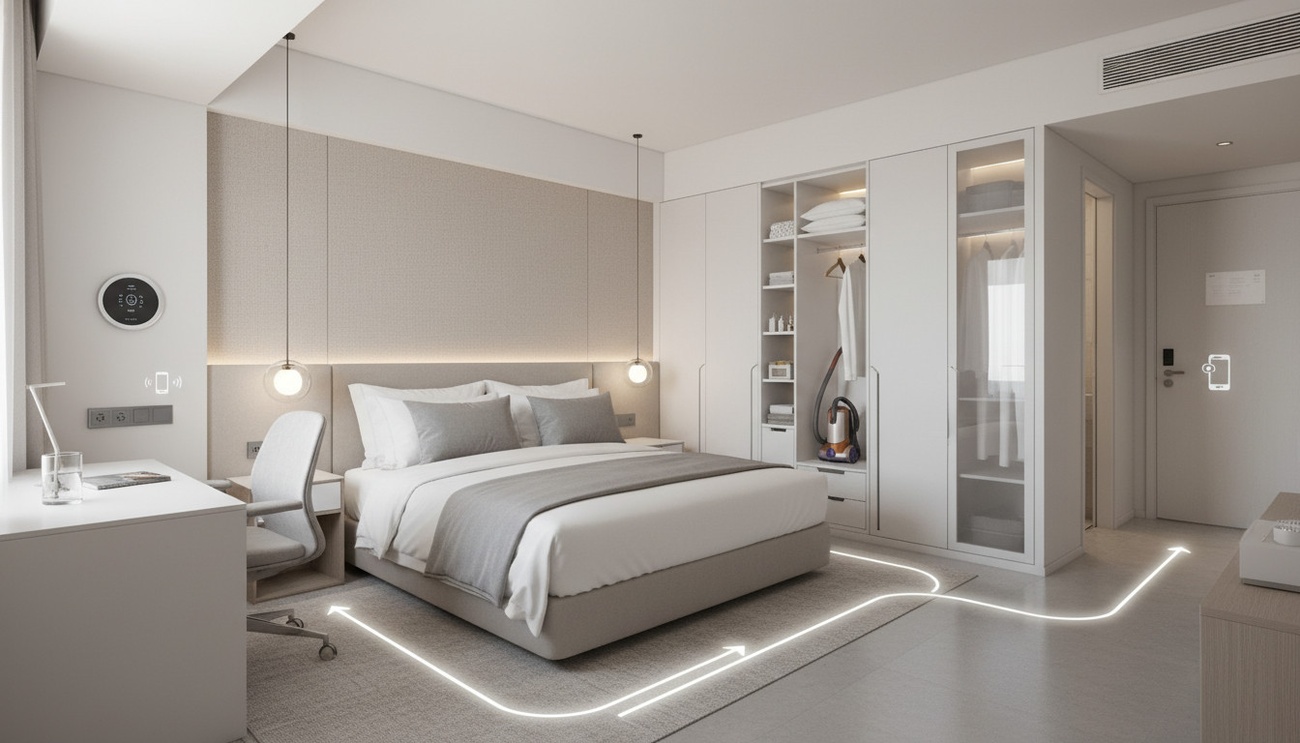
The past year was one of the most active renovation cycles the U.S. hotel industry has seen in recent memory. Industry reports throughout 2025 indicated that hundreds of thousands of hotel rooms were either under renovation or scheduled for upgrades, as owners rushed to meet brand standards, improve asset value, and stay competitive. With that level of activity came something equally valuable: real-world lessons.
After working through multiple renovation projects across the U.S., we’re seeing clear patterns in what worked, what didn’t, and what many owners would approach differently today. None of these mistakes were caused by poor planning alone. Most were the result of fast-moving decisions in a rapidly changing operating environment. Here’s what the industry learned the hard way and how smarter operators are approaching 2026.
Regret #1: "We Renovated for 2019, Not 2026"
The most expensive mistake of 2025? Designing for pre-pandemic operating models that no longer exist.
What happened
Hotels completed renovations with traditional front desk layouts requiring 3-4 staff members, only to discover they can't fill those positions. Properties installed elaborate breakfast buffet setups when 36% of hotels had already reduced services like daily room cleaning due to labor shortages. At the same time, industry data throughout 2024–2025 showed that hotels were actively reducing hours per occupied room and adjusting service levels to match ongoing staffing challenges.
The disconnect became clear quickly: properties were redesigned for a staffing model that no longer exists.
The 2026 shift
Owners are now designing around operational reality, not historical norms:
- Smaller, more efficient front desk layouts
- Self-service check-in as a core function, not an add-on
- Housekeeping closets placed strategically to reduce walking time
- Durable materials that reduce cleaning effort
- Layouts that support leaner teams
For a deeper look at this approach, see our article on labor-efficient renovation strategies.
Regret #2: "We Misread What Guests Actually Value"
Not all renovation investments deliver equal returns.
What happened
Many properties allocated significant budget to visual upgrades - feature walls, statement furniture, lobby aesthetics - while underinvesting in the elements guests interact with most.
Recent traveler research consistently shows that guests prioritize:
- Comfortable beds and high-quality bedding
- Reliable temperature control
- Strong, consistent WiFi
- Functional, quiet, and clean rooms
Yet in many 2025 projects, these fundamentals were underfunded compared to design-driven elements.
The 2026 shift
Smart operators are rebalancing their budgets:
- Upgrading mattresses and bedding as a priority
- Investing in room-level HVAC control
- Ensuring strong WiFi infrastructure across the property
- Designing rooms for comfort and usability, not just appearance
Regret #3: "We Underestimated Technology Integration"
The 2025 renovation boom coincided with rapid technology adoption. Hotels rushed to add mobile check-in, keyless entry, and smart room controls and often as afterthoughts.
What happened
In many 2025 renovations, technology was treated as a late-stage addition:
- Mobile key systems added after lock selection
- Smart thermostats without full integration
- Insufficient electrical capacity for modern guest needs
This led to fragmented systems that created friction for both guests and staff.
The 2026 shift
Technology is now planned as core infrastructure:
- Integrated systems defined early in the project
- Electrical and network capacity designed for future growth
- Staff training included as part of implementation
- Backup systems maintained for operational continuity
The takeaway: technology works best when it’s built into the project, not layered on top of it.
Regret #4: "We Started Too Late"
With elevated financing costs and construction inflation continuing through 2025, timing became critical. Properties that delayed decisions faced compressed timelines and premium pricing.
What happened
Many owners delayed renovation planning after receiving PIP requirements or identifying the need for upgrades. This led to:
- Limited contractor availability
- Higher pricing due to compressed timelines
- Rushed material procurement
- Renovations overlapping with high-demand periods
In a busy construction environment, waiting often meant paying more for less flexibility.
The 2026 shift
More owners are moving toward proactive planning cycles:
- Starting 12–18 months in advance
- Securing contractors earlier in the process
- Ordering FF&E ahead of construction
- Aligning renovation schedules with seasonal demand
For a detailed breakdown of planning and execution timelines, see our article.
Regret #5: "We Chased Trends Instead of Longevity"
The 2025 design trend cycle moved fast: biophilic walls, bold color palettes, Instagram-worthy lobbies. Many looked dated within months.
What happened
Some 2025 renovations leaned heavily into short-term design trends:
- Bold color schemes
- High-maintenance design features
- Statement elements that aged quickly
While visually impactful, many of these choices increased maintenance costs and reduced long-term flexibility.
The 2026 shift
Owners are prioritizing durability and adaptability:
- Neutral base designs with flexible accents
- Commercial-grade materials over residential finishes
- Regionally relevant design instead of trend-driven concepts
- Furniture and layouts that can evolve over time
The focus is shifting from “what looks new” to what performs over time.
Regret #6: "We Didn’t Design for Operations"
Beautiful renderings rarely show housekeeping carts, maintenance access, or staff workflow, yet these determine whether renovations actually function.
What happened
Operational realities were often overlooked:
- Housekeeping inefficiencies due to poor layouts
- Maintenance access challenges
- Lack of storage for daily operations
- Designs that slowed down cleaning and servicing
These issues don’t show up in renderings, but they impact performance every day.
The 2026 shift
Operations are now part of the design process:
- Housekeeping teams review layouts before approval
- Maintenance teams assess system accessibility
- Front desk teams evaluate guest flow
- Cleaning time becomes a design consideration
In short: if it doesn’t work operationally, it doesn’t work at all.
What 2026 Renovations Will Do Differently
Across the U.S., a clear pattern is emerging.
Budget Allocation
More investment in systems (HVAC, electrical, plumbing), durable materials, long-life FF&E and less emphasis on purely decorative elements.
Planning Approach
Shift from reactive to proactive:earlier project starts, better coordination, more realistic timelines.
Design Philosophy
From trend-driven to performance-driven: operational efficiency, guest comfort, timeless appeal.
Technology Strategy
From add-on features to infrastructure that supports tech evolution.
Market Context for 2026
According to industry reports, the U.S. hotel pipeline remains active, with new openings, renovations, and conversions continuing across multiple segments, especially extended-stay and midscale properties.
At the same time labor challenges remain a factor, operating costs are elevated, RevPAR growth is expected to be steady rather than aggressive.
This means one thing:
Renovations must deliver measurable operational and financial impact, not just visual upgrades.
For a deeper look at how renovation decisions affect long-term performance read our article.
Final Takeaway
The biggest lesson from 2025 is simple:
Renovations are now about how a hotel operates every single day.
The most successful 2026 projects will reflect current labor realities, focus on what guests actually value, integrate technology from the start, prioritize durability over trends, and be planned early and executed strategically.
Liberty Way Renovation: Turning Lessons Into Strategy
At Liberty Way Renovation, we apply these lessons to every project we take on across the U.S.
Our approach is built around:
- Real operational workflows
- Practical, durable design solutions
- Clear budgeting and planning
- Renovations that support both guest experience and staff efficiency
Ready to renovate smarter in 2026?
We'll help you to avoid 2025's common mistakes, design for operational reality, budget realistically for technology, prioritize guest priorities over trends, and plan timelines that protect pricing and quality.